- English
- French
- German
- Portuguese
- Spanish
- Russian
- Japanese
- Korean
- Arabic
- Irish
- Greek
- Turkish
- Italian
- Danish
- Romanian
- Indonesian
- Czech
- Afrikaans
- Swedish
- Polish
- Basque
- Catalan
- Esperanto
- Hindi
- Lao
- Albanian
- Amharic
- Armenian
- Azerbaijani
- Belarusian
- Bengali
- Bosnian
- Bulgarian
- Cebuano
- Chichewa
- Corsican
- Croatian
- Dutch
- Estonian
- Filipino
- Finnish
- Frisian
- Galician
- Georgian
- Gujarati
- Haitian
- Hausa
- Hawaiian
- Hebrew
- Hmong
- Hungarian
- Icelandic
- Igbo
- Javanese
- Kannada
- Kazakh
- Khmer
- Kurdish
- Kyrgyz
- Latin
- Latvian
- Lithuanian
- Luxembou..
- Macedonian
- Malagasy
- Malay
- Malayalam
- Maltese
- Maori
- Marathi
- Mongolian
- Burmese
- Nepali
- Norwegian
- Pashto
- Persian
- Punjabi
- Serbian
- Sesotho
- Sinhala
- Slovak
- Slovenian
- Somali
- Samoan
- Scots Gaelic
- Shona
- Sindhi
- Sundanese
- Swahili
- Tajik
- Tamil
- Telugu
- Thai
- Ukrainian
- Urdu
- Uzbek
- Vietnamese
- Welsh
- Xhosa
- Yiddish
- Yoruba
- Zulu
High-Speed Rail Sound Barrier Roll Forming Line
A high-speed rail sound barrier roll forming line takes steel or aluminum strip from a coil and forms it into panels, posts, and channels for railway noise barriers. If you’ve worked with a highway guardrail roll forming machine, the process will look familiar. The tooling, finished profiles, and applicable standards differ. When I prepare a quote, I start with the profile drawings and material specifications. Those details help me determine what tooling the line needs and what to confirm with the supplier before moving ahead.
How a High-Speed Rail Sound Barrier Roll Forming Line Works
Why Rail Noise Barriers Need Dedicated Tooling
Railway noise barriers help projects meet local noise requirements. The World Health Organization’s 2018 guidelines recommend keeping average railway noise exposure below 54 dB Lden. In the United States, the Federal Transit Administration publishes guidance on how to assess noise for transit projects.
When a customer asks me to quote a high-speed rail sound barrier roll forming line, I start by asking which parts they want to produce. A typical barrier system includes acoustic panels, posts, channels, and reinforcing sections. I review the drawings for each part to check the profile dimensions, strip width, and hole positions before recommending a line configuration.
A highway guardrail roll forming machine uses the same basic forming process to make W-beams. Railway barrier profiles have different cross-sections, hole layouts, and acceptance criteria. Those details determine the roller tooling, the punching setup, and what we measure during the factory trial.
From Coil to Finished Profile
The hydraulic decoiler feeds the strip into a leveller to remove the curve left by coiling. The press punches the holes specified on the drawing, then the strip passes through a series of roller stations. Each station bends the strip a little further until it reaches the required shape. A hydraulic shear or flying shear cuts the profile to length, and a runout table or stacker collects the finished parts.
Steel springs back slightly after bending, so the angle you measure on a finished part can differ from the angle set by the tooling. As Halmos explains in the Roll Forming Handbook, the way the bend is formed across successive roller stations helps control springback. During a factory trial, I check the finished angles and dimensions against the customer’s drawing.
Materials and Surface Protection
The corrosion exposure, design life, and project parameters are taken into consideration while selecting the material. Galvanised steel, pre-painted steel, aluminium, and stainless steel are often used for the construction of sound barrier components. In order to process galvanised steel and hot-rolled steel with thicknesses ranging from 2.0 mm to 4.0 mm, our two-wave guardrail machine is used. For the reason that a scratched zinc coating reduces corrosion resistance, surface protection is something that should be given attention. In addition to producing completed guardrails that are smooth and free of scratches, the machine also has rollers that have been toughened and smoothed down to decrease friction on the coated strip. It is important that you provide the coating type and thickness when you make a request for a quotation. This will allow the engineer to plan the roller surface and pass design around it.
Core Components and Specifications of a Two-Wave Guardrail Machine
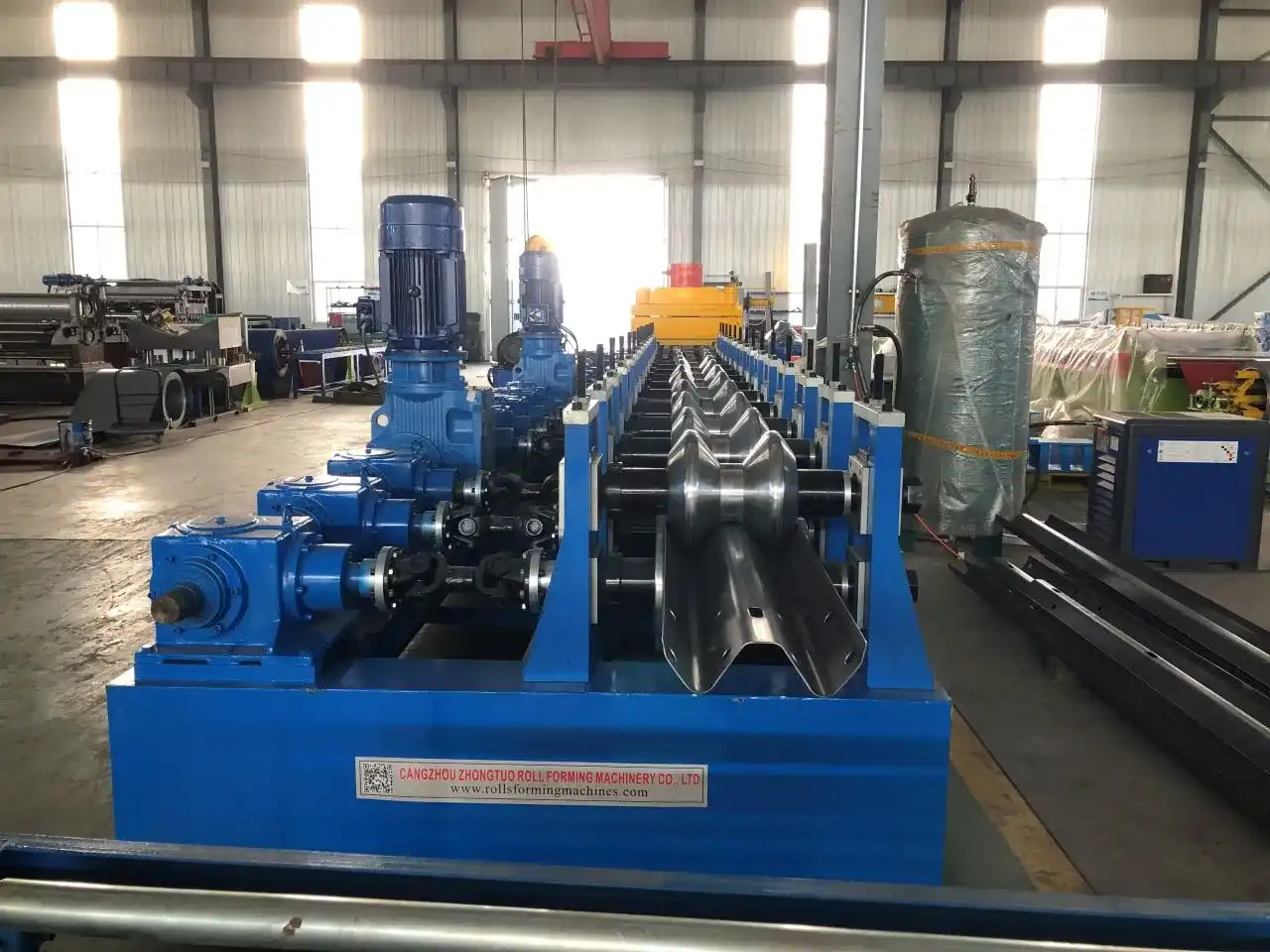
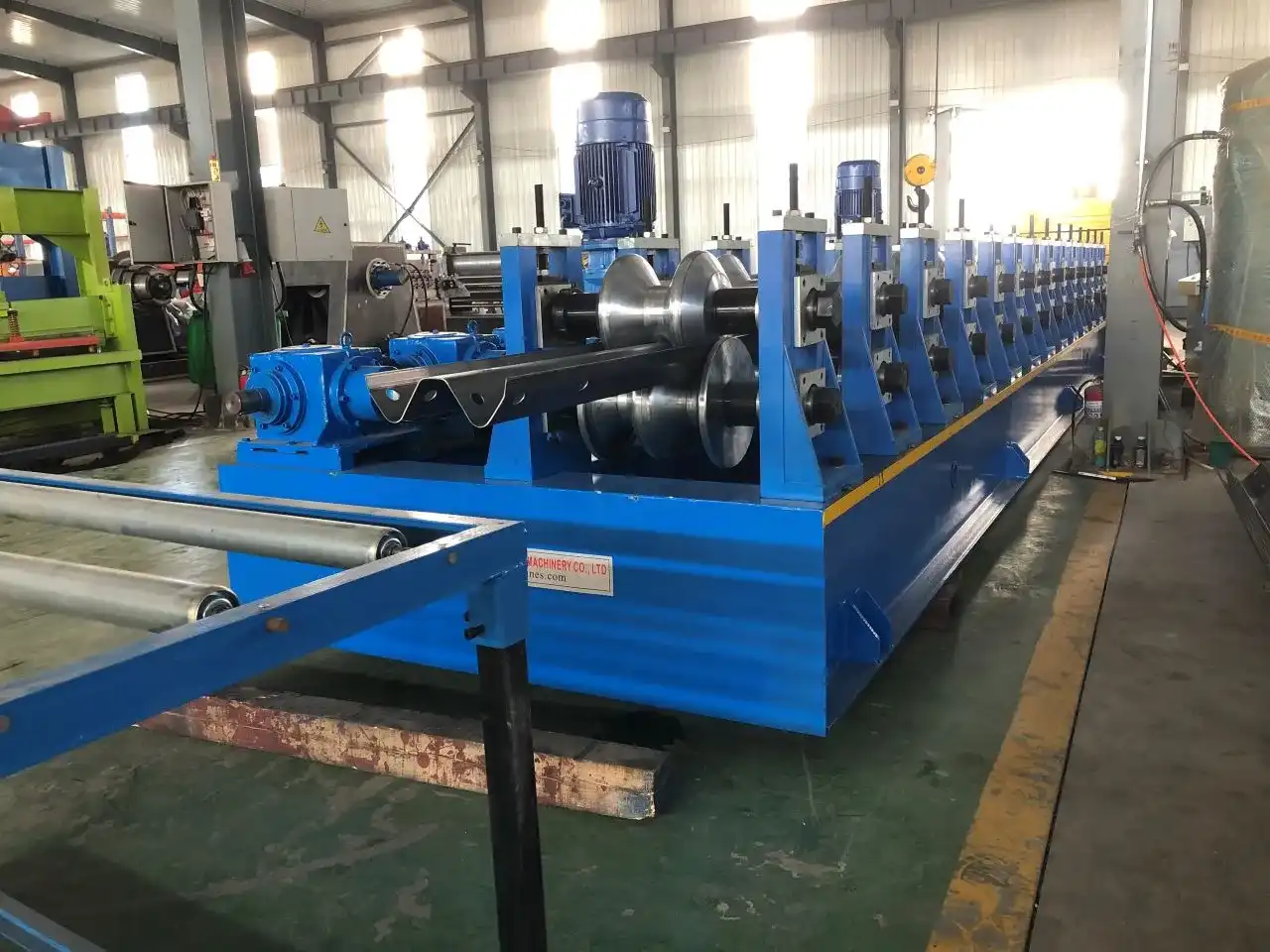
A sound barrier line shares its mechanical basics with a highway guardrail roll forming machine, so I use the ZTRFM two-wave guardrail machine to show what solid build quality looks like in practice.
Forming Section and Frame
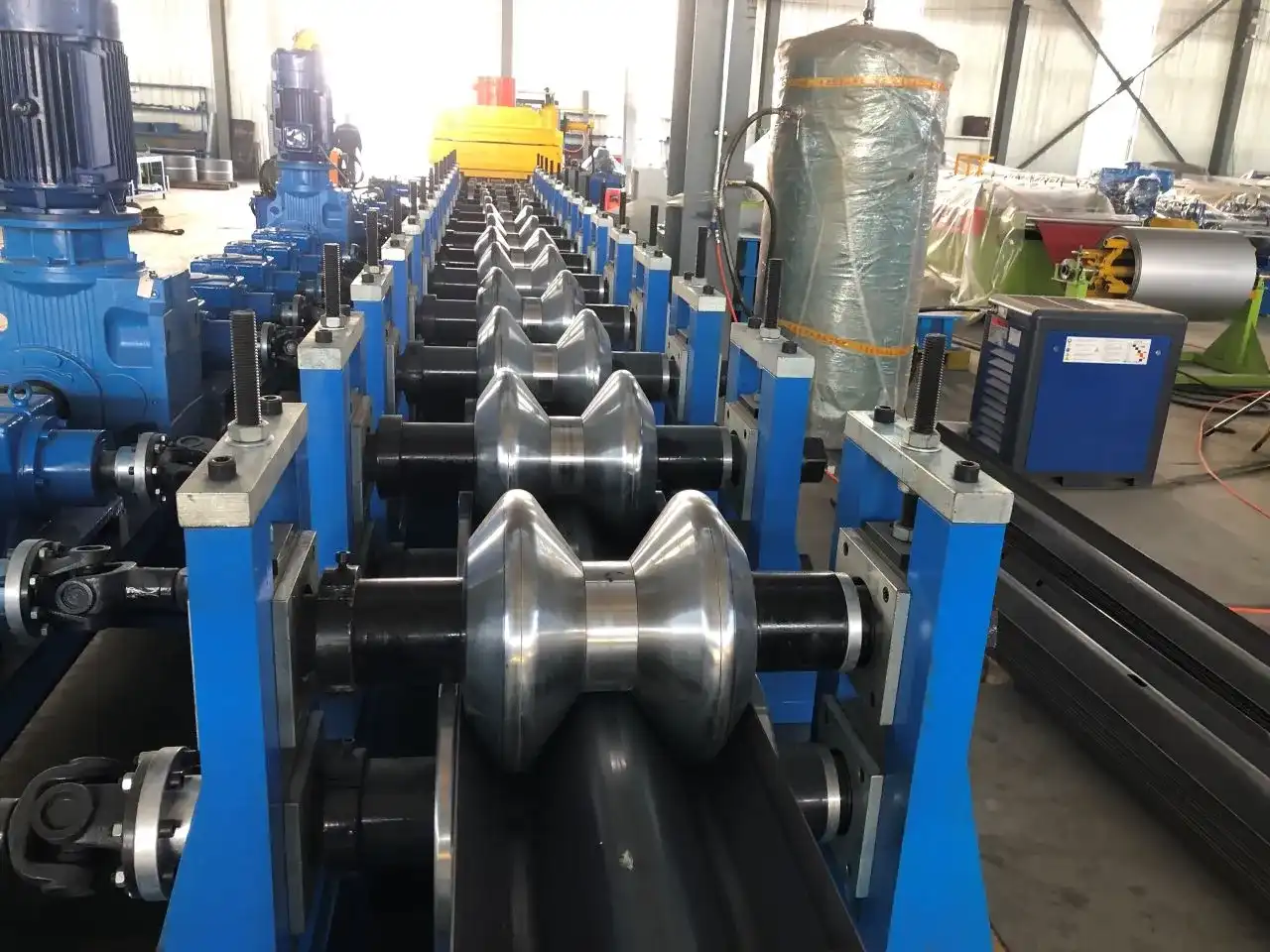
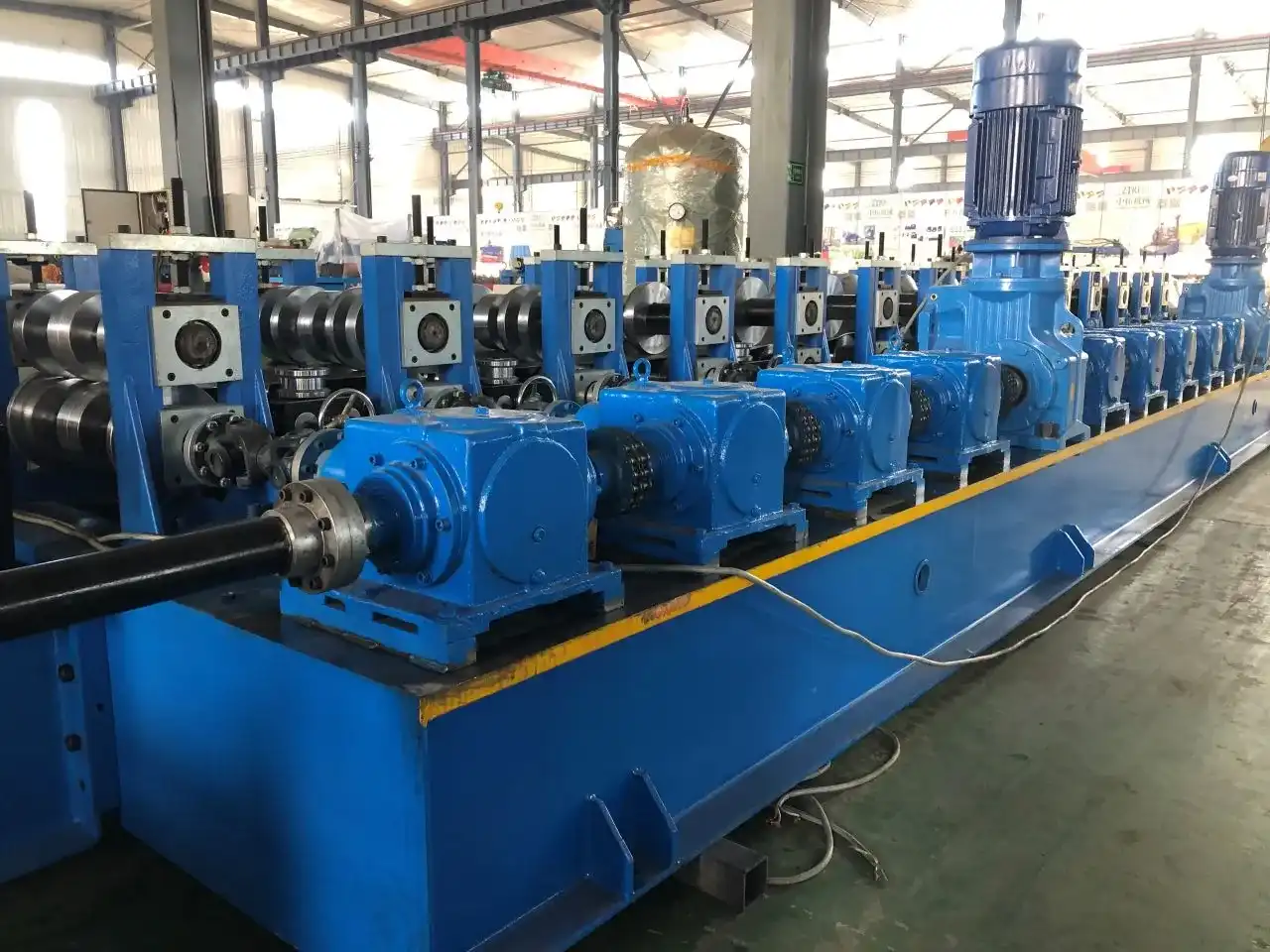
The construction of the forming section is what determines how long the machine maintains its precision since it is responsible for carrying the weight of each pass. 19 rolling stations are included in this model. The diameter of the rolling shafts is 100 millimetres, and they are made of quenched steel using a 45-pound steel grade. The rollers are made of GCr15 that has been heat-treated, which makes them resistant to wear from the coated strip. The vertical structure of the machine is made of iron, and the body of the machine is welded together using 400# H steel at the joints. A well-known Chinese brand, HRB bearings, is used to provide support for the shafts. All of these components work together to provide the line with robust support, which reduces vibration and makes it easier for the profile to remain constant even during extended production runs.
Drive, Power, and Control
This configuration uses a 30 kW motor with a gearbox and runs at 6–10 m/min on strip 2.0–4.0 mm thick. For a shop with smaller batches, a standard-speed line may be enough. If you run larger batches regularly, it’s worth comparing the output of a faster automated line against your order volume.
The operator enters the required part length on the touchscreen, and the PLC controls punching and cut-off. Consistent cut lengths matter for both guardrail sections and railway sound barrier components. For example, panels need to fit between the posts when the barrier is assembled on site.
Material Handling, Punching, and Cutting
The mill is not the only factor that determines daily production; upstream and downstream equipment also play a role. Additionally, the levelling system straightens the strip before punching, and the hydraulic decoiler is capable of handling coils weighing between 5 and 10 tonnes. In order to eliminate the requirement for a second handling step, a hydraulic punching press is used to generate bolt and post holes in conjunction with the forming process. A hydraulic shear or a flying shear is used in the cutting system, and an output table or stacker is utilised to gather produced pieces for the purpose of making them more manageable. Guardianrail widths ranging from 310 mm to 500 mm are compatible with the machine. Regarding a project including a sound barrier, I modify the punching pattern and tooling in accordance with your designs.
How to Choose a Supplier and Avoid Costly Mistakes
What to Compare Before Buying
When you ask for a quote on a highway guardrail roll forming machine, send each supplier the same profile drawings and material specifications. Include the steel grade, yield strength, thickness, coating, coil width, and coil weight. Mark the finished lengths, hole sizes and positions, and tolerances on the drawings. If the line needs to make several profiles, list them and ask how long each changeover takes.
Ask how many finished pieces the line can produce per hour with your hole pattern and cut length. That gives you a better basis for comparing quotes than the forming speed alone. Check the frame construction, shaft diameter, roller hardness, bearing brand, and availability of spare parts.
Have each supplier itemise the decoiler, leveller, forming mill, punching dies, cut-off unit, control cabinet, and runout table. Ask them to show tooling, factory testing, installation, and operator training as separate items so you can compare the total cost on the same basis.
Common Purchasing Mistakes
A low quote can get expensive once you add dies, testing, or on-site training. Before placing the order, sign off on the profile drawings, material grade, tolerances, and hole pattern. Those details give the supplier a clear basis for designing the tooling and give you something to measure during the factory trial.
If you want one line to make both guardrail beams and sound barrier sections, ask the supplier to show how the tooling will change between profiles. During the trial, run your specified material and check the finished dimensions, hole positions, twist, and coating condition. Put the acceptance criteria, commissioning steps, warranty terms, and technical support commitments in the contract.
Why Work With ZTRFM
ZTRFM, also known as Cangzhou Zhongtuo, has designed and manufactured cold roll forming machinery since 2014. We build lines from customer drawings and offer OEM and ODM services. We can also supply raw materials and accessories alongside the equipment. ZTRFM reports exports to more than 150 countries. If your project calls for ISO 9001, CE, or CAS documentation, tell us what your procurement team needs so we can confirm which documents apply to the equipment in your quote.
For U.S. guardrail projects, confirm the required AASHTO MASH documentation for the complete roadside barrier system. Before we start production, we ask you to approve the profile drawing and material specifications the machine will be built around.
Conclusion
A high-speed rail sound barrier roll forming line levels, punches, forms, and cuts coil into the panels, posts, and channels specified for a railway project. It shares the basic production sequence of a highway guardrail roll forming machine. The finished profile, hole layout, and acceptance criteria determine the tooling and how the parts are checked during a trial.
For reference, ZTRFM’s two-wave guardrail machine has 19 forming stations, 100 mm quenched 45# steel shafts, heat-treated GCr15 rollers, a cast-iron vertical frame, a welded 400# H-section steel base, HRB bearings, a 30 kW gearbox drive, and PLC control. Use those specs to compare machine construction, then use your own drawings and trial samples to judge whether the line can make the parts you need.
FAQ
1. Can one line make both sound barrier and guardrail profiles?
It depends on the profiles. W-beam guardrails and railway sound barrier sections have different shapes and project requirements. Send us both drawings so we can check whether one line can handle them with a tooling change or whether you need two lines.
2. What steel can the two-wave guardrail machine run?
This configuration runs galvanised or hot-rolled steel 2.0–4.0 mm thick. It produces guardrail profiles 310–500 mm wide and runs at 6–10 m/min.
3. Are punching and cutting automatic?
Yes. The hydraulic press punches the bolt and post mounting holes. Depending on the configuration, a hydraulic shear or a flying shear cuts the profile to length. The operator sets the part length on the touchscreen, and the PLC controls punching and cutting.
4. What should I send for a quote?
Start with the profile drawings, steel grade and thickness, coating, coil width and weight, and target output. If the drawings leave out hole sizes, hole spacing, or finished lengths, include those details separately. Please also tell us your factory’s supply voltage and the destination country.
Request a Quote for a High-Speed Rail Sound Barrier Roll Forming Line
ZTRFM has built cold roll forming machines since 2014 and reports exports to more than 150 countries. If your project requires ISO 9001, CE, or CAS documentation, let us know so we can confirm what applies to the equipment quoted.
For a highway guardrail roll forming machine or a custom railway sound barrier line, email your drawings and production requirements to zhongtuorollforming@gmail.com. Our engineers will review them and recommend a line configuration for your profiles and target output.