- English
- French
- German
- Portuguese
- Spanish
- Russian
- Japanese
- Korean
- Arabic
- Irish
- Greek
- Turkish
- Italian
- Danish
- Romanian
- Indonesian
- Czech
- Afrikaans
- Swedish
- Polish
- Basque
- Catalan
- Esperanto
- Hindi
- Lao
- Albanian
- Amharic
- Armenian
- Azerbaijani
- Belarusian
- Bengali
- Bosnian
- Bulgarian
- Cebuano
- Chichewa
- Corsican
- Croatian
- Dutch
- Estonian
- Filipino
- Finnish
- Frisian
- Galician
- Georgian
- Gujarati
- Haitian
- Hausa
- Hawaiian
- Hebrew
- Hmong
- Hungarian
- Icelandic
- Igbo
- Javanese
- Kannada
- Kazakh
- Khmer
- Kurdish
- Kyrgyz
- Latin
- Latvian
- Lithuanian
- Luxembou..
- Macedonian
- Malagasy
- Malay
- Malayalam
- Maltese
- Maori
- Marathi
- Mongolian
- Burmese
- Nepali
- Norwegian
- Pashto
- Persian
- Punjabi
- Serbian
- Sesotho
- Sinhala
- Slovak
- Slovenian
- Somali
- Samoan
- Scots Gaelic
- Shona
- Sindhi
- Sundanese
- Swahili
- Tajik
- Tamil
- Telugu
- Thai
- Ukrainian
- Urdu
- Uzbek
- Vietnamese
- Welsh
- Xhosa
- Yiddish
- Yoruba
- Zulu
Roofing Equipment for Steel Structure EPCs: Buyer's Guide
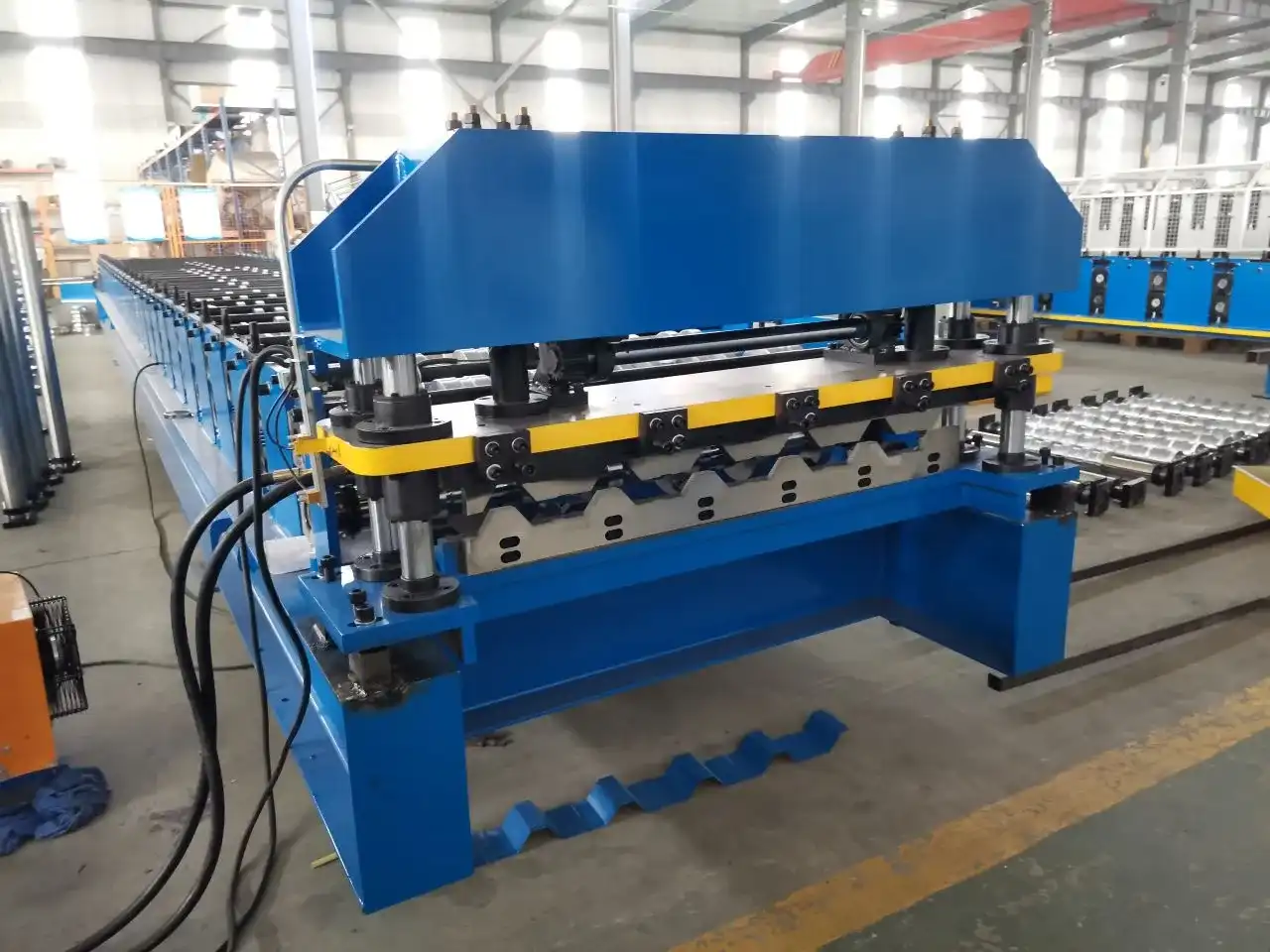
A trapezoidal sheet roll forming machine is the essential piece of roofing equipment that an EPC for a steel construction requires in order to maintain a consistent panel supply, maintain cost management, and keep site delays to a minimum. It is not only the price that determines which option is the best; panel profile, coil material, actual output, cutting precision, and after-sales service are all important considerations. The EPC contractors, roofing manufacturers, distributors, and OEM purchasers who need to compare estimates with confidence are the target audience for this guide that I wrote. With the ZTRFM high-speed model serving as a functioning example, it discusses the fundamentals of machines, including selection, price, supplier checks, installation, and maintenance.
Why This Equipment Matters for EPC Projects Panel Accuracy Drives Project Results
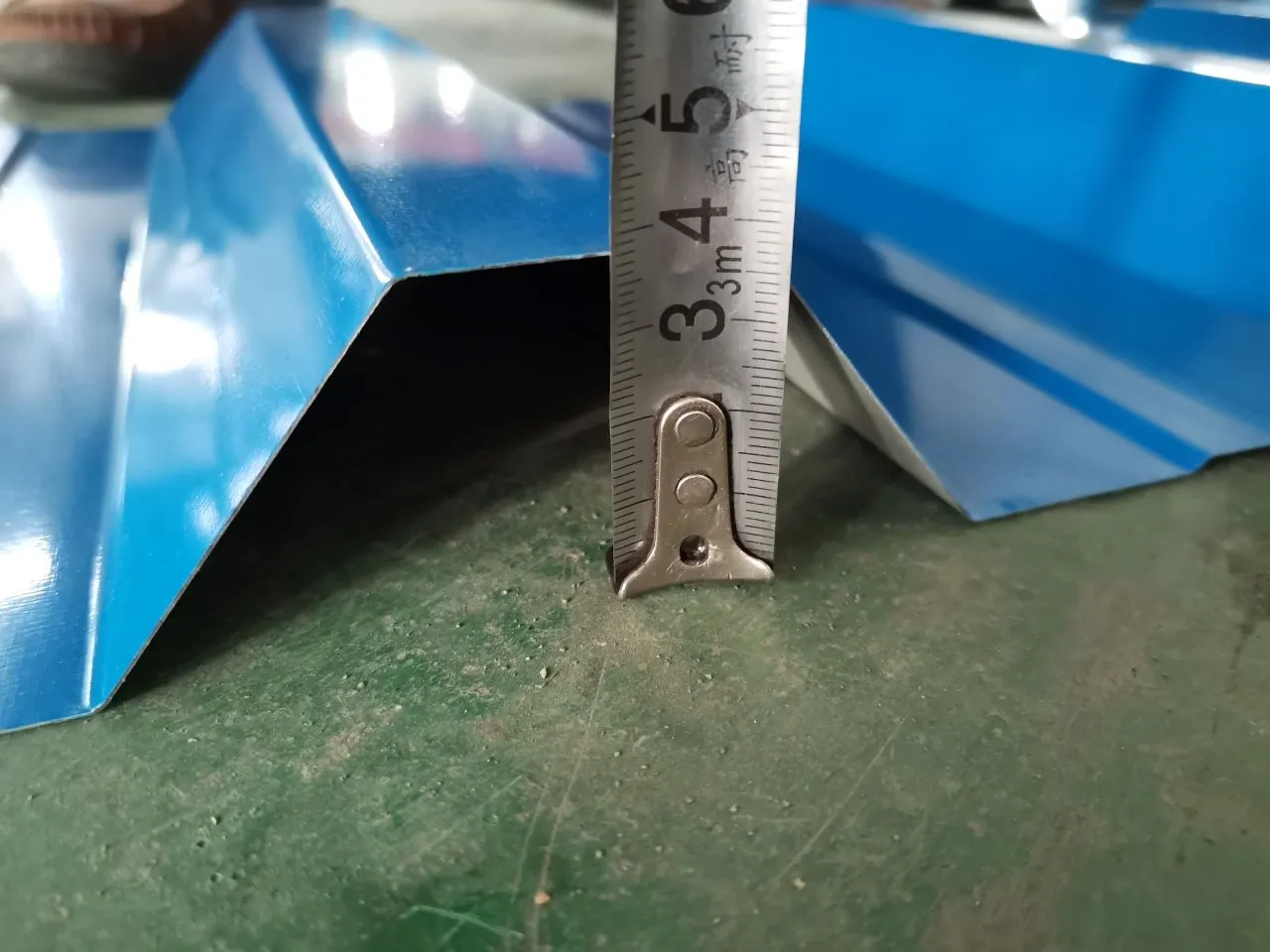
Warehouses, factories, logistics centers, agricultural structures, and low-rise commercial roofs are all examples of buildings that are covered with trapezoidal panels. On these projects, the accuracy of the panels has an impact on the structural fit, the speed of installation, the resistance to weather, and the cost. A rib that is wrong by a few millimetres causes side laps to be open, and personnel waste hours trying to rectify it on the job site. As a result of the fact that ASTM E1592 establishes a test method for the structural performance of sheet metal roof and siding systems under uniform static air pressure, geometry is an important consideration that goes beyond looks. Panel supply is also maintained in accordance with the erection timetable when a trustworthy forming line is used.
What the Machine Does
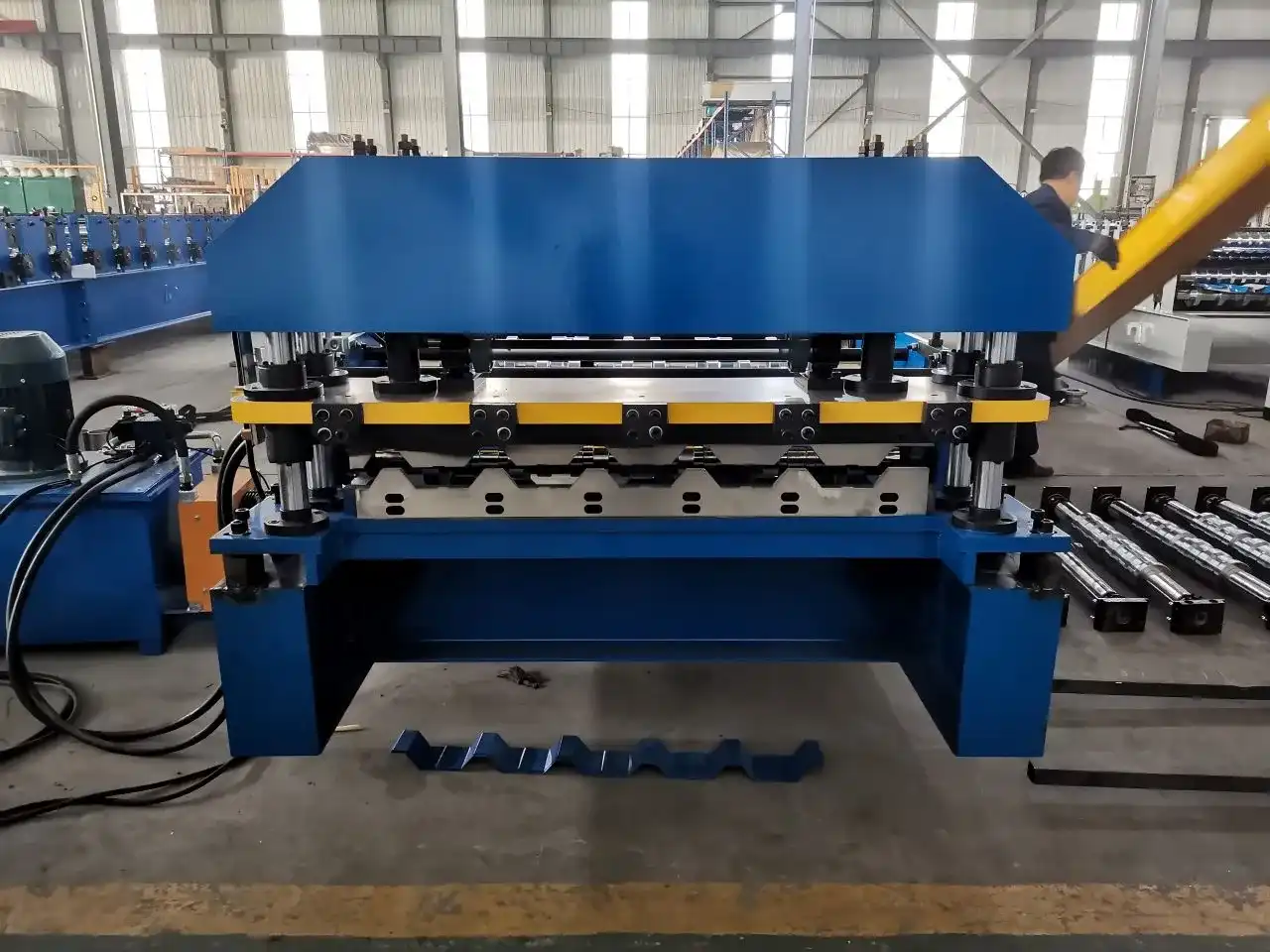
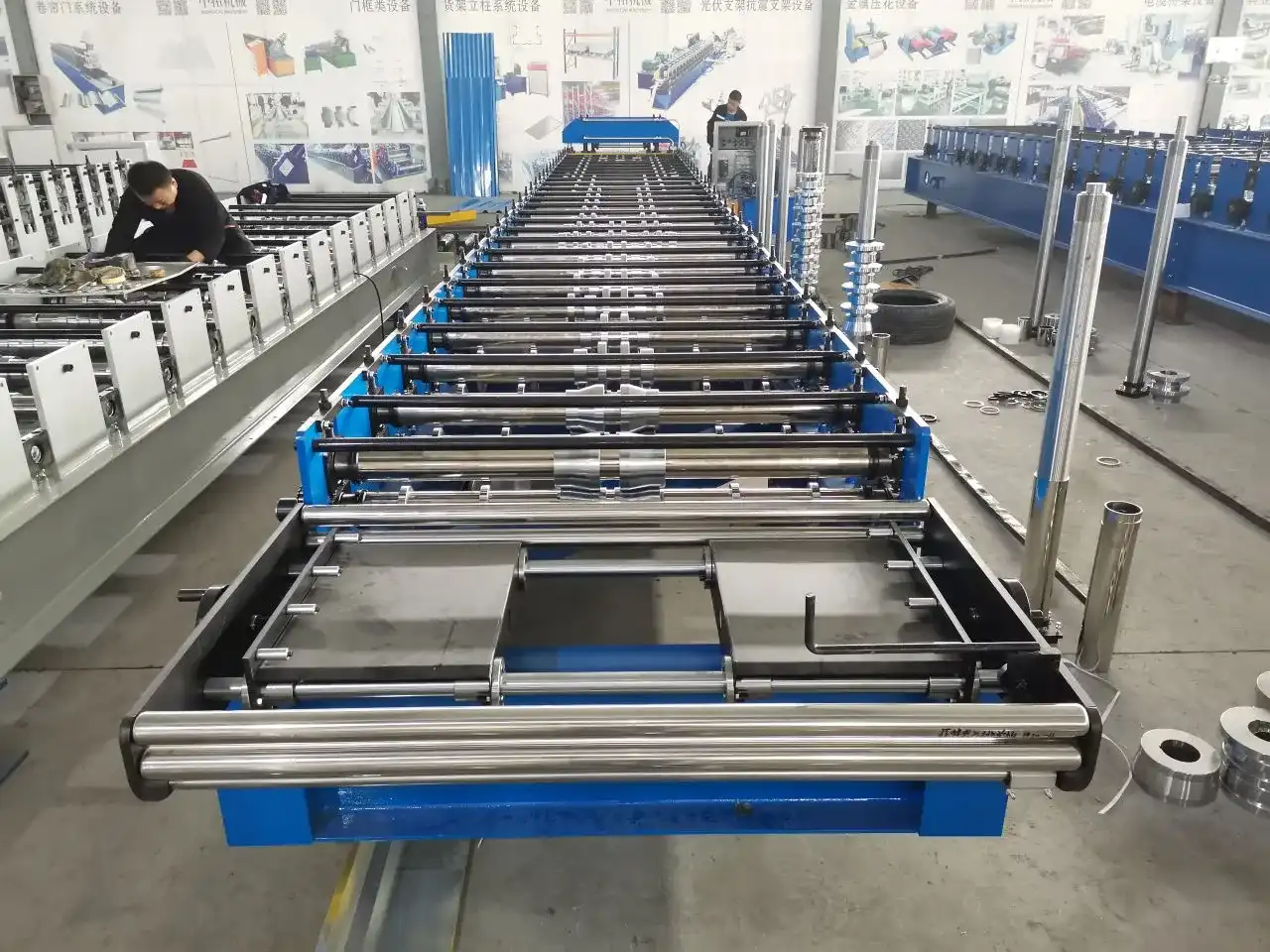
By putting the strip through a sequence of roller stations, the machine transforms metal coil into panels that can be used for interior or exterior walls or roofs. Decoiling, guiding, levelling, progressive forming, length measuring, cutting, and panel discharge are the tasks that are typically performed in the order listed above. Through the use of each station, the strip is bent somewhat farther, ensuring that the thickness remains constant and that the profile is repeated across extended stretches. Press forming and hand bending are less consistent over long runs. A comprehensive discussion of this progressive bending may be found in the Roll Forming Handbook, which was edited by George Halmos.
Main Components and Specifications
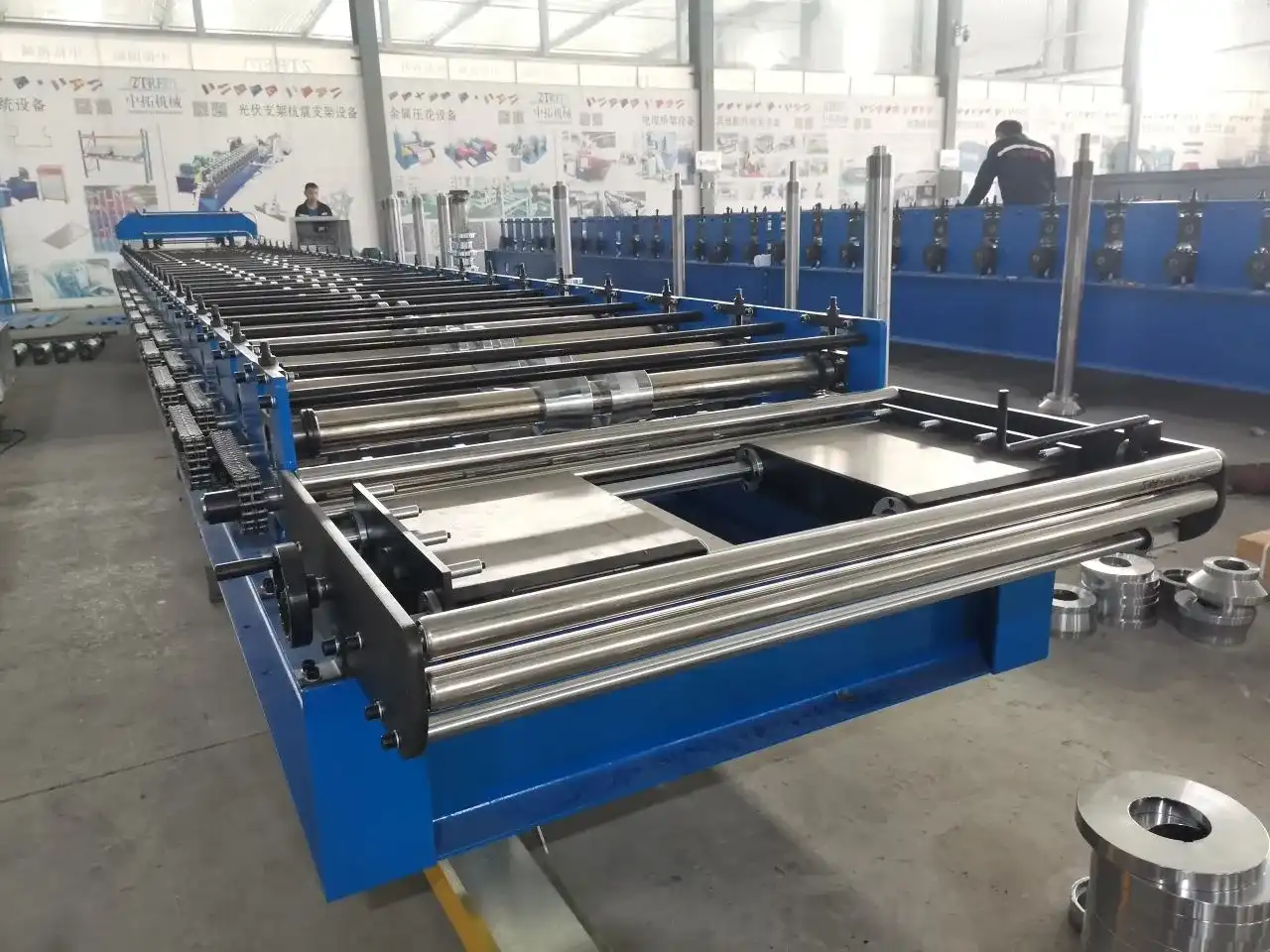
decoiler, guide, levelling unit, rollers, shafts, hydraulic cutter, PLC cabinet, and run-out table are all components that are essential to performance. Performance is dependent on how well these components operate together. The widths of our high-speed model are 1000 mm or 1250 mm, and it can form PPGI, GI, and aluminium with thicknesses ranging from 0.3 to 1.0 mm. It has a gearbox drive, a cast iron construction, a framework made of 350 H steel, and 26 roller stations that are mounted on solid shafts that are 80 mm in diameter. The rollers are made of 45# steel and have a hard chrome coating. Forming at 0–60 meters per minute, or around 197 feet per minute, is driven by a motor with 5.5 kilowatts of power. Using Cr12MoV blades, a 7.5 kW hydraulic cutter is capable of maintaining a length tolerance of ±1 mm. Voltage and width can be customized.
Machine Types, Capacity, and Selection
Machine Types
A trapezoidal sheet roll forming machine can be configured as a manual, semi-automatic, or automatic line. Furthermore, they are available in designs that are either single-layer or double-layer, with either conventional or bespoke profiles. Semi-automatic machines are more suitable for use in smaller workplaces, while automated lines are able to repeat results more accurately and need less of the operator. Double-layer machines maximise the use of floor space but restrict the flexibility of changeovers. Approved designs and specialised tools are required for using custom profiles. Quick-change cassette tooling is advantageous for multi-profile businesses because it reduces the amount of time needed for changeovers. Increased speed results in increased production; nevertheless, purchasers should still verify cutting precision, forming stability, noise levels, and the requirements for maintenance.
Real Production Capacity
Begin with a straightforward equation: the needed output is equal to the entire panel length divided by the number of production hours that are available. Consider a scenario in which a project requires 120,000 meters of panel to be installed in forty working days on a single shift of eight hours. That equates to 3,000 meters each day, or 375 meters per hour, before any breaks are taken. Because coil changes, cutting, stacking, setup, inspection, and maintenance are not taken into account when calculating catalogue speed, a rating of 60 meters per minute does not always equal 3,600 meters of completed panel per hour. Ask suppliers to measure the finished panel length per shift using your own coil. The outcome is affected by a number of factors, including roller alignment, encoder precision, synchronisation of the PLC, and operator expertise.
Choosing the Right Machine
First, make a determination on the sort of buyer: an EPC contractor, a roofing manufacturer, a distributor, or an OEM. Next, make a list of the panel profile, the coil range, the output goal, the automation, the room in the workplace, the safety standards, and the delivery date. Equitable comparisons are maintained using a weighted matrix. Quality, usable capacity, durability, pricing, replacement parts, technical assistance, and warranty are all essential factors to consider when calculating a score. For roof or wall applications, panel projects in the United States often need 24 or 22 gauge steel or 0.032-inch aluminium, as well as custom lengths ranging from 3 feet to 20 feet 10 inches and flashings that may reach up to 20 feet 11 inches. Verify that the actual thickness is within the range of 0.3–1.0 millimetres that the machine can handle.
Price, Suppliers, and Procurement Risk
What Shapes the Price
When it comes to pricing, automation, profile complexity, material thickness, forming stations, roller quality, cutting technology, stacking, electrical parts, and customisation are the factors that are taken into consideration. Compare what each quote includes and calculate the full cost of getting the line into production. A quote should specify whether or not the decoiler, control cabinet, cutter, run-out table, spare roller sets, paperwork, commissioning, and training are included in the package. Many ZTRFM models include a manual decoiler at no extra charge; confirm this in the quote. There are other factors that influence the final investment, including freight, packing, insurance, import tariffs, and installation. Used equipment may reduce the cost of entry; nevertheless, it is important to begin by inspecting roller wear, controls, paperwork, forming correctness, and the availability of replacement parts.
Checking the Manufacturer
Confirm that the supplier builds the trapezoidal sheet roll forming machine in its own factory. Request that you be provided with designs, sample panels, acceptance documents, factory films, and references from previous customers. In the year 2014, ZTRFM was established in Botou, Cangzhou, which is the center of roll-forming equipment in China. certifications such as ISO 9001, CE, and CAS are held by our company, and our equipment is used in more than 150 countries. Requirements for a quality management system are outlined in the ISO 9001:2015 standard. In addition, you should go over the packaging, Incoterms, shipping paperwork, and customs duties. After-sales service should include commissioning, training, warranty, replacement parts, and remote troubleshooting, all of which are supported by Siemens cloud IoT diagnostics.
Avoiding Mistakes and Following a Workflow
Incomplete specifications are the root cause of the majority of difficulties. It is possible for the lowest quotation to conceal unstable forming, weak components, poor cutting, and limited support. Send the identical package to each and every one of your suppliers, which includes the following information: a profile drawing, the material grade, the thickness, the effective width, the length range, the tolerances, the goal output, the power supply, the destination, and the delivery date. Examine the various quotes about the brands of components, the lead time, the payment arrangements, and the guarantee. For the purpose of verifying claims, a video inspection, a sample run with your coil, or a site visit may be used. The majority of purchasers in the United States anticipate video approval testing prior to shipping. Be in agreement on the acceptance standards, verify the packing lists, and make sure that the contract includes provisions for shipment, training, and warranty obligations.
Installation, Maintenance, and Complete Lines
Installation and Commissioning
Before the delivery, make sure that the foundations, floor loading, crane access, coil storage, panel handling area, electrical supply, grounding, and lighting are all appropriately prepared. The National Electrical Code, sometimes known as NFPA 70, is the code that regulates electrical installations in the United States. Local inspectors may request particular listings. Perform an early confirmation of the control and voltage needs; ZTRFM is able to customise the voltage. The process of commissioning includes not only no-load testing and loaded trials, but also operator training, mechanical alignment, electrical and hydraulic connections, and the configuration of the PLC. Whenever it is practicable, you should do the trial manufacturing using the coil you plan to use in production.
Preventive Maintenance
It is important to do frequent inspections of the following components: bearings, shafts, chains, rollers, hydraulic fluid, hoses, cutting blades, and fasteners. Back up the PLC program regularly. Consistent maintenance cuts down on downtime, safeguards the panel finish, and saves on the cost of ownership. In addition, safety is an important consideration. Procedures for regulating hazardous energy during service are described in OSHA 3120. These procedures include lockout and tagout. Roller sets and blades that are spare should be kept in stock by lines that operate on a daily basis. When a problem arises, remote diagnostics using the Siemens cloud Internet of Things allow for more expedient diagnosis.
Complete Line or Standalone Machine
The decoiler, former, stacker, spare parts, and tooling are all handled by a single provider when the line is considered to be complete. ZTRFM provides everything from a single machine to an intelligent manufacturing line, in addition to OEM/ODM tooling customised to the customer's specifications. Your panel output will be able to meet installation milestones thanks to this configuration, which provides you with a single point of accountability. Additionally, make preparations for future requirements, such as the manufacture of double-layer profiles, automated stacking, additional profiles, and control improvements. When you begin with a foundation that is adjustable, you may avoid paying for capacity that you do not currently need.
Conclusion
When the profile accuracy, cutting tolerance, and output of a trapezoidal sheet roll forming machine are consistent with the requirements of the task, the machine is able to serve steel structure EPC projects. Specifications are simpler to evaluate when one has a better understanding of the process and the components. The data from the project should be used to determine the kind of machine and its capacity, and actual meters per shift should be used rather than catalogue speed. When comparing prices, it is necessary to have entire configurations that include all of the extras, freight, installation, and training that are included. Confirmation of direct manufacture, certification, references, and after-sales assistance should be included in the supplier assessment process. In order to ensure uptime and panel quality, proper site preparation, compliance with electrical and safety regulations, and preventative maintenance are all necessary. The duty is simplified, and there is flexibility for future development, when the whole line is provided by a single provider.
FAQ
1. How do I estimate real output?
Divide the required panel length by the available production hours to find the minimum output rate. Allow for coil changes, cutting, stacking, and maintenance when estimating what the line can deliver. Although the practical output is lower, the rated speed is sixty meters per minute; thus, you should request a trial with your own coil.
2. What affects the price?
There are a number of factors that are important, including automation, profile complexity, thickness range, roller stations, cutting system, stacking, electrical parts, customisation, shipping, and installation. Require a detailed configuration of the items.
3. Can ZTRFM build a custom profile?
Indeed. Provide our staff with a panel drawing or sample, and they will create tooling that is profile-to-order and provide a recommendation for an appropriate configuration.
4. Do you support buyers after delivery?
We offer commissioning guidance, operator training, and spare parts. We also provide remote diagnostics through Siemens cloud IoT.
Request a Customized Trapezoidal Sheet Roll Forming Machine Proposal
ZTRFM may be reached at zhongtuorollforming@gmail.com. Make sure to include your panel design, coil specification, target output, and delivery location in your email. As a trapezoidal sheet roll forming machine manufacturer, ZTRFM offers quick-change tooling, Siemens PLC control, ISO 9001, CE, and CAS-certified lines, and OEM/ODM design. Without putting any pressure on you, our staff will provide recommendations on setup, realistic capacity, and delivery strategy.
References
1. Halmos, G. T. (Ed.), Roll Forming Handbook, CRC Press, 2006
2. ASTM International, ASTM E1592 Standard Test Method for Structural Performance of Sheet Metal Roof and Siding Systems by Uniform Static Air Pressure Difference, 2005
3. ASTM International, ASTM A653/A653M Standard Specification for Steel Sheet, Zinc-Coated (Galvanized) or Zinc-Iron Alloy-Coated (Galvannealed) by the Hot-Dip Process, 2022
4. International Organization for Standardization, ISO 9001 Quality Management Systems – Requirements, 2015
5. National Fire Protection Association, NFPA 70 National Electrical Code, 2023
6. Occupational Safety and Health Administration, OSHA 3120 Control of Hazardous Energy (Lockout/Tagout), 2002
