- English
- French
- German
- Portuguese
- Spanish
- Russian
- Japanese
- Korean
- Arabic
- Irish
- Greek
- Turkish
- Italian
- Danish
- Romanian
- Indonesian
- Czech
- Afrikaans
- Swedish
- Polish
- Basque
- Catalan
- Esperanto
- Hindi
- Lao
- Albanian
- Amharic
- Armenian
- Azerbaijani
- Belarusian
- Bengali
- Bosnian
- Bulgarian
- Cebuano
- Chichewa
- Corsican
- Croatian
- Dutch
- Estonian
- Filipino
- Finnish
- Frisian
- Galician
- Georgian
- Gujarati
- Haitian
- Hausa
- Hawaiian
- Hebrew
- Hmong
- Hungarian
- Icelandic
- Igbo
- Javanese
- Kannada
- Kazakh
- Khmer
- Kurdish
- Kyrgyz
- Latin
- Latvian
- Lithuanian
- Luxembou..
- Macedonian
- Malagasy
- Malay
- Malayalam
- Maltese
- Maori
- Marathi
- Mongolian
- Burmese
- Nepali
- Norwegian
- Pashto
- Persian
- Punjabi
- Serbian
- Sesotho
- Sinhala
- Slovak
- Slovenian
- Somali
- Samoan
- Scots Gaelic
- Shona
- Sindhi
- Sundanese
- Swahili
- Tajik
- Tamil
- Telugu
- Thai
- Ukrainian
- Urdu
- Uzbek
- Vietnamese
- Welsh
- Xhosa
- Yiddish
- Yoruba
- Zulu
What roofing for steel warehouses?
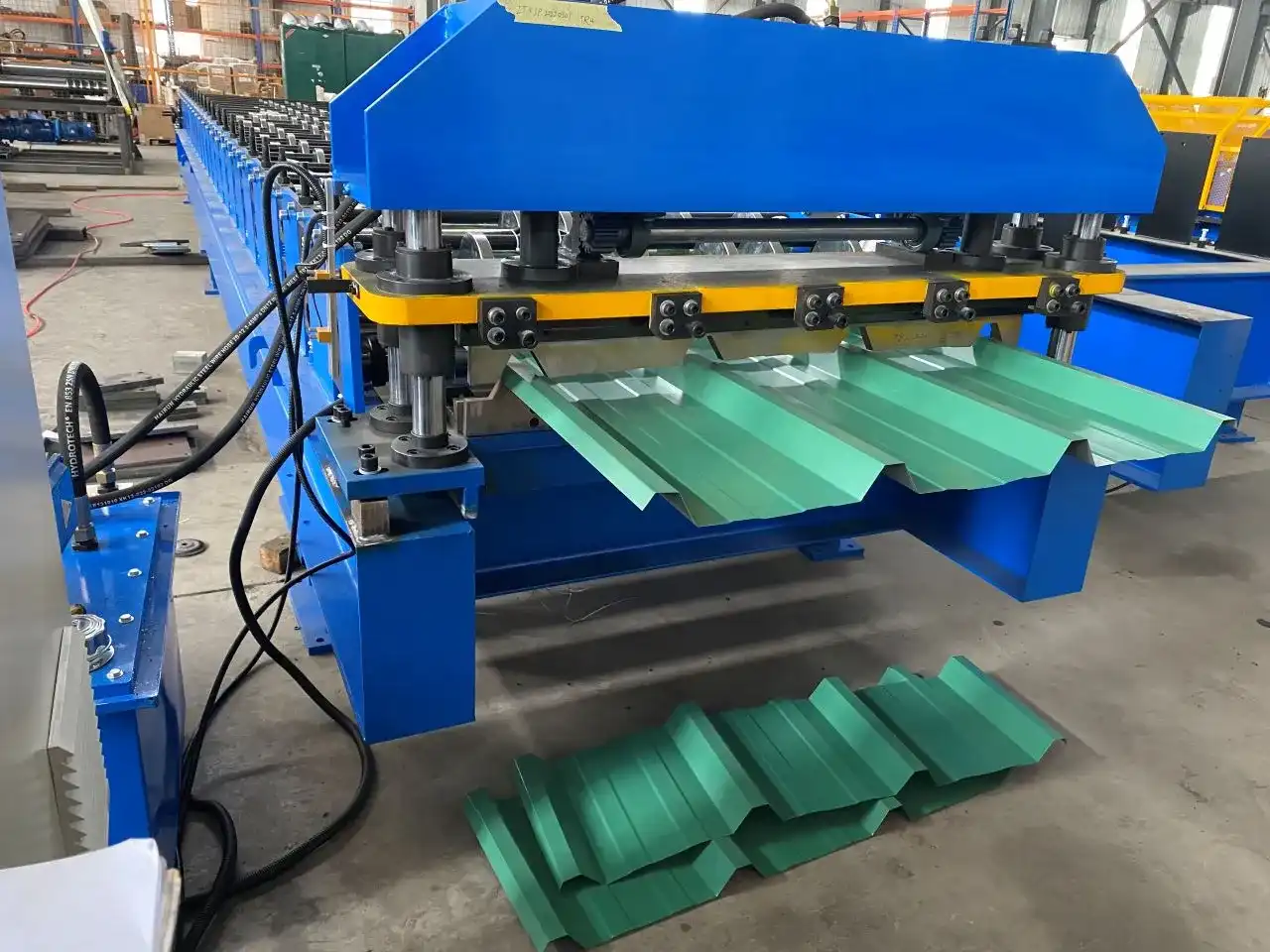
Trapezoidal metal roofing is the most practical choice for most steel warehouses. Its raised ribs carry load across purlins, shed water quickly, and install quickly with exposed fasteners. Galvanized, pre-painted, and aluminum coils cover different climates and budgets. If you plan to make panels yourself, a trapezoidal sheet roll forming machine turns coil into cut-to-length sheets without heating the metal. That gives you control over profile, gauge, and delivery dates. Your final profile still depends on span, purlin spacing, wind and snow loads, insulation, and local code. Below, I walk through each decision in plain steps.
Choosing Trapezoidal Roofing for a Steel Warehouse Why Trapezoidal Profiles Suit Warehouses
If you look at barns, workshops, warehouses, and transport hubs, you'll see triangular panels. These panels are strong, drain well, are quick, and don't need much care. The sheet can be stretched between the purlins because the ribs make it stiff. Through the pan channels between the ribs, water from rain and melting snow moves toward the eaves. Crews have to work faster because they have to screw panels down in long lines. A lot of the time, corrugated sheets are less stiff per pound of steel than trapezoidal ribs. Stand-alone and sandwich panels may be worth the extra money if you need to hide the screws or have insulation built right in. Trapezoidal panels are a good choice for a simple, large shed because they are cheap and work well.
Picking the Right Rib Profile
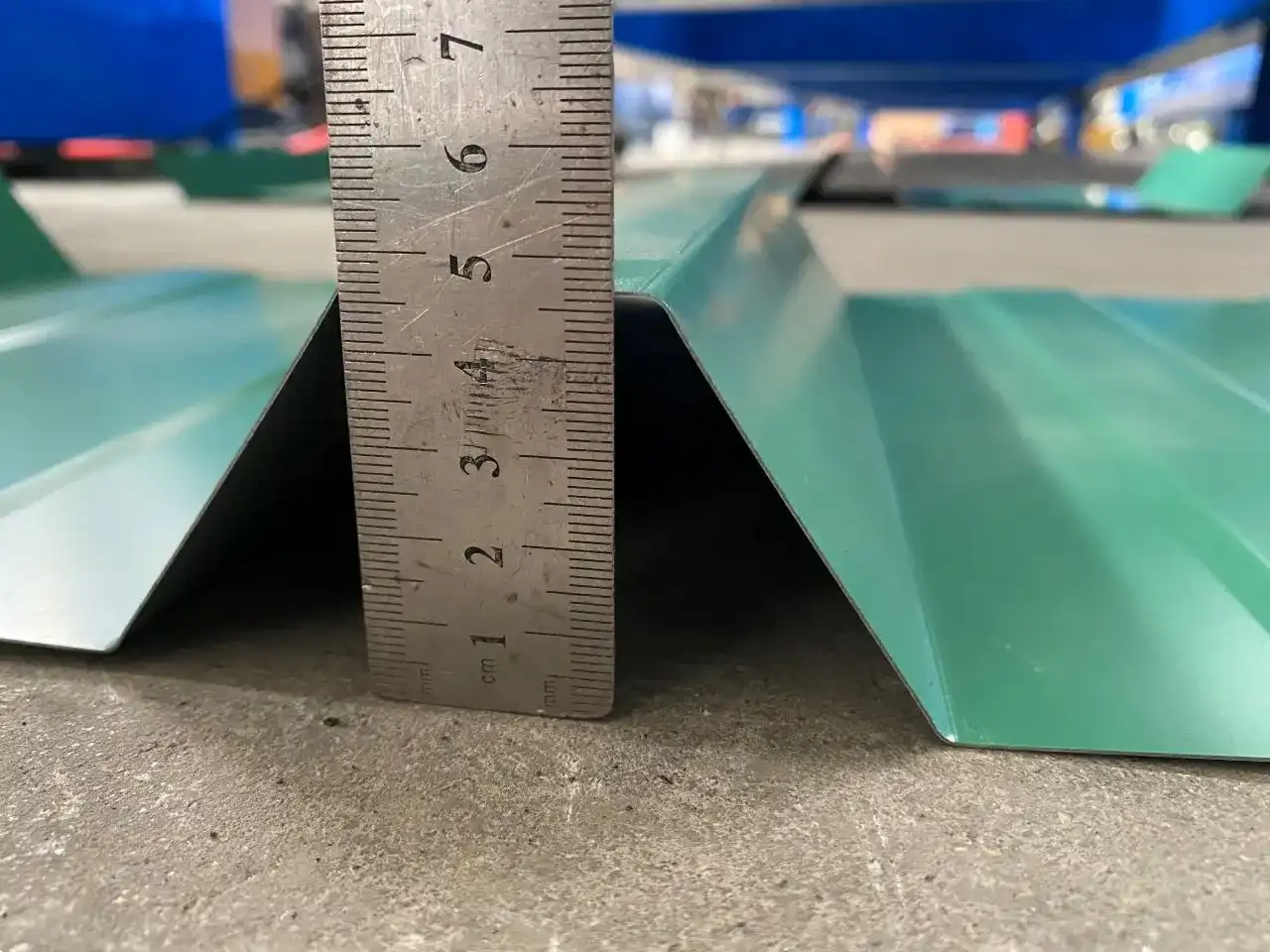
A profile's structure is the first thing you need to know about how to choose one. You can cover walls with low ribs and make light roofs out of them. Medium and high ribs make the sheet stiffer, which lets you space the purlins farther apart. That's why I check the bolt position, sheet thickness, overlap, pitch, and effective cover width. Any of these things can change how much weight it can hold. When the building has insulation, the shapes need to match the insulation and trim. The International Building Code uses ASCE 7 to tell us how to build roofs in the US. It tells the computer how much wind and snow to expect. He or she should check the span tables to make sure they are correct before you order tools. You can also look at a similar panel from a building to get an idea of the shape of the ribs.
Steel, Aluminum, and Coating Choices
Pick a coil based on how long it will last and where it will be used. When you're in the middle of the country and the ground is dry, GI steel works well. ASTM A653 covers zinccoat steel sheet. Paint-ready PPGI coil gives roofs color and protects them from paint. Aluminum does not rust and works well in coastal air, but it is more likely to dent. Most of the time, people in the US want 24 or 22 grade steel and 0.032-inch aluminum. For our high-speed line, the widths are between 0.3 and 1 mm. However, measurement standards aren't always the same, so I use a sample coil to be sure I know the exact thickness. Industrial or coastal sites may need heavy coats. The covering class can be found from the coil provider.
How a Trapezoidal Sheet Roll Forming Machine Works
Main Parts of the Production Line
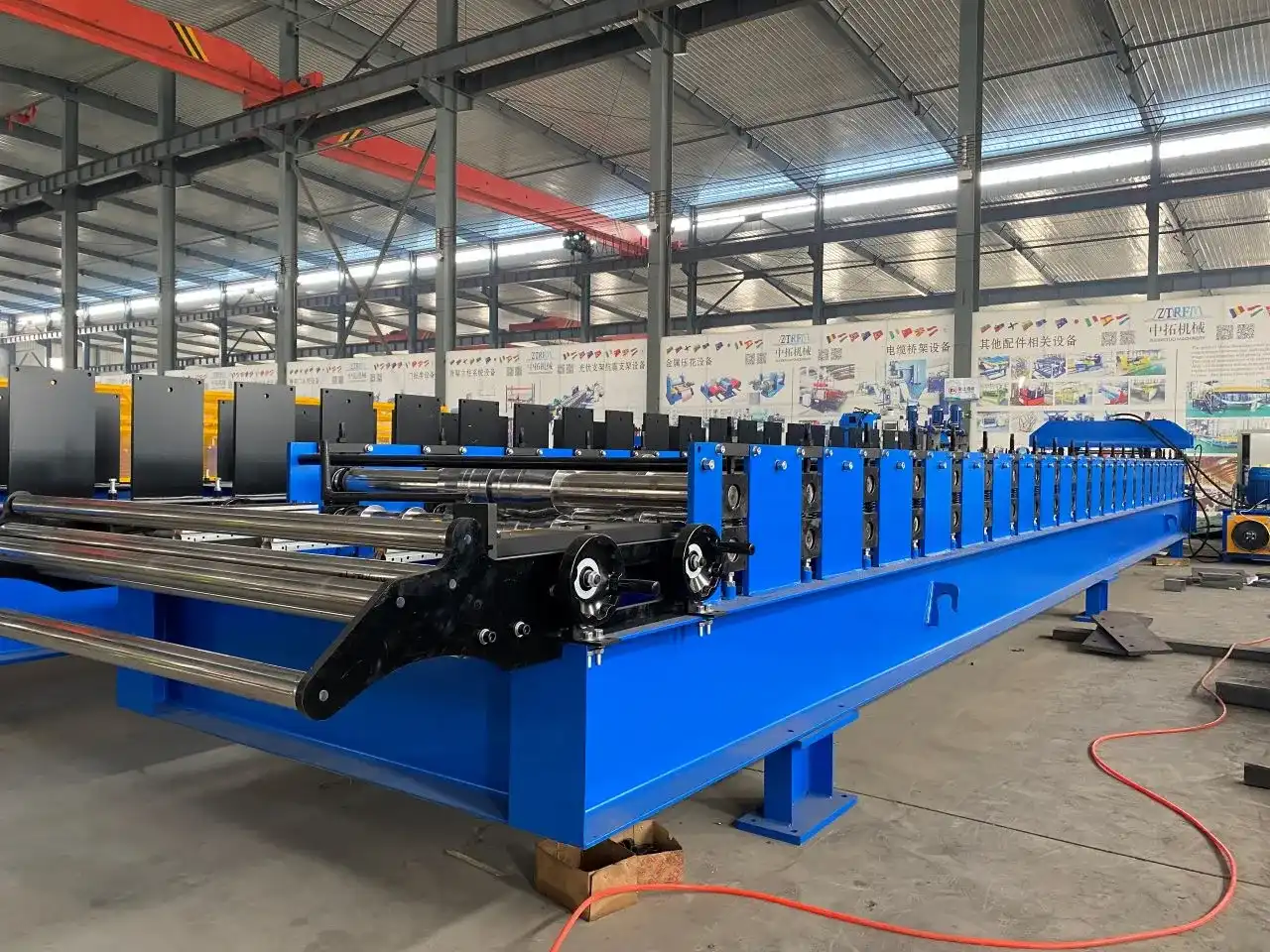
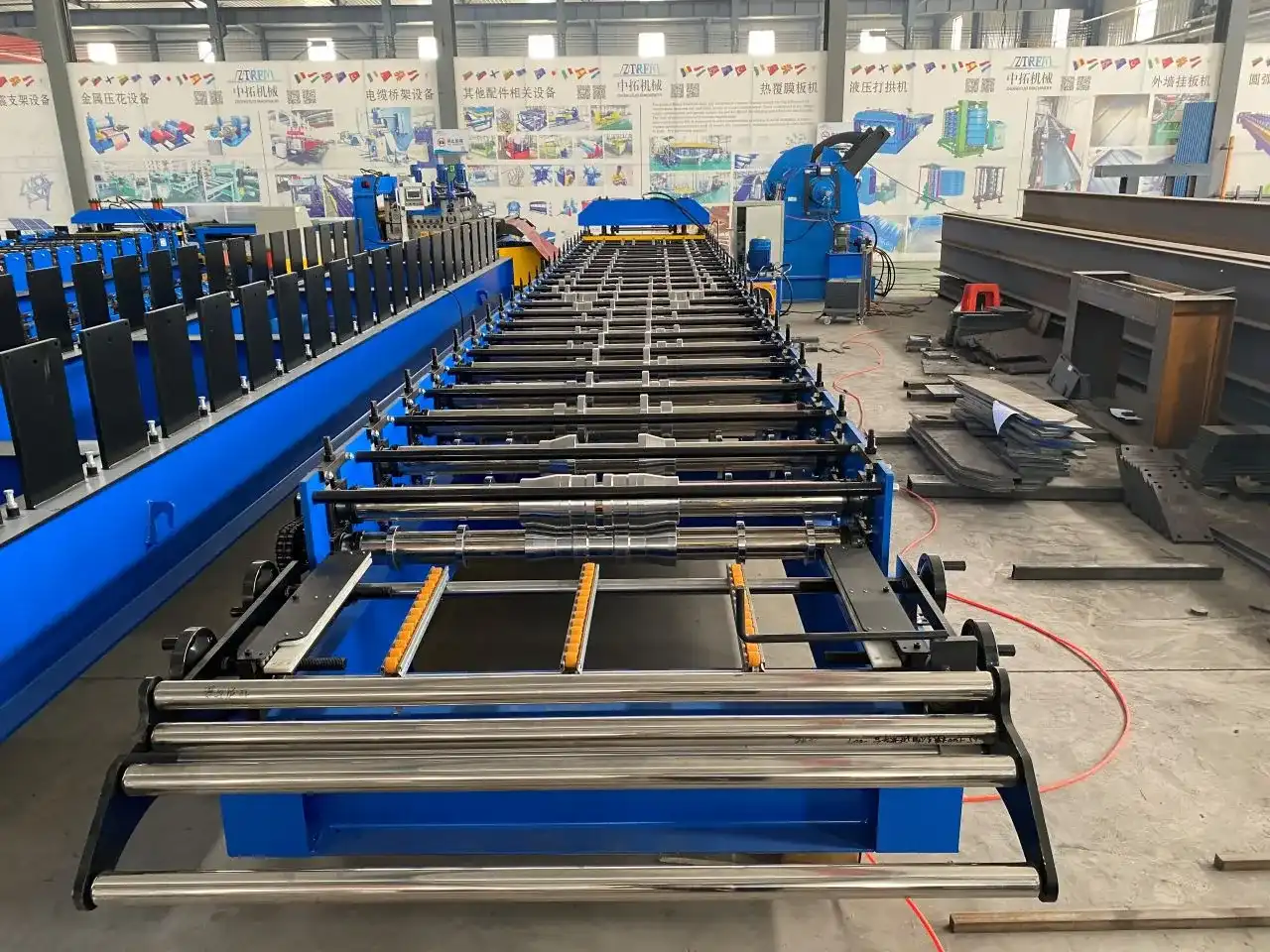
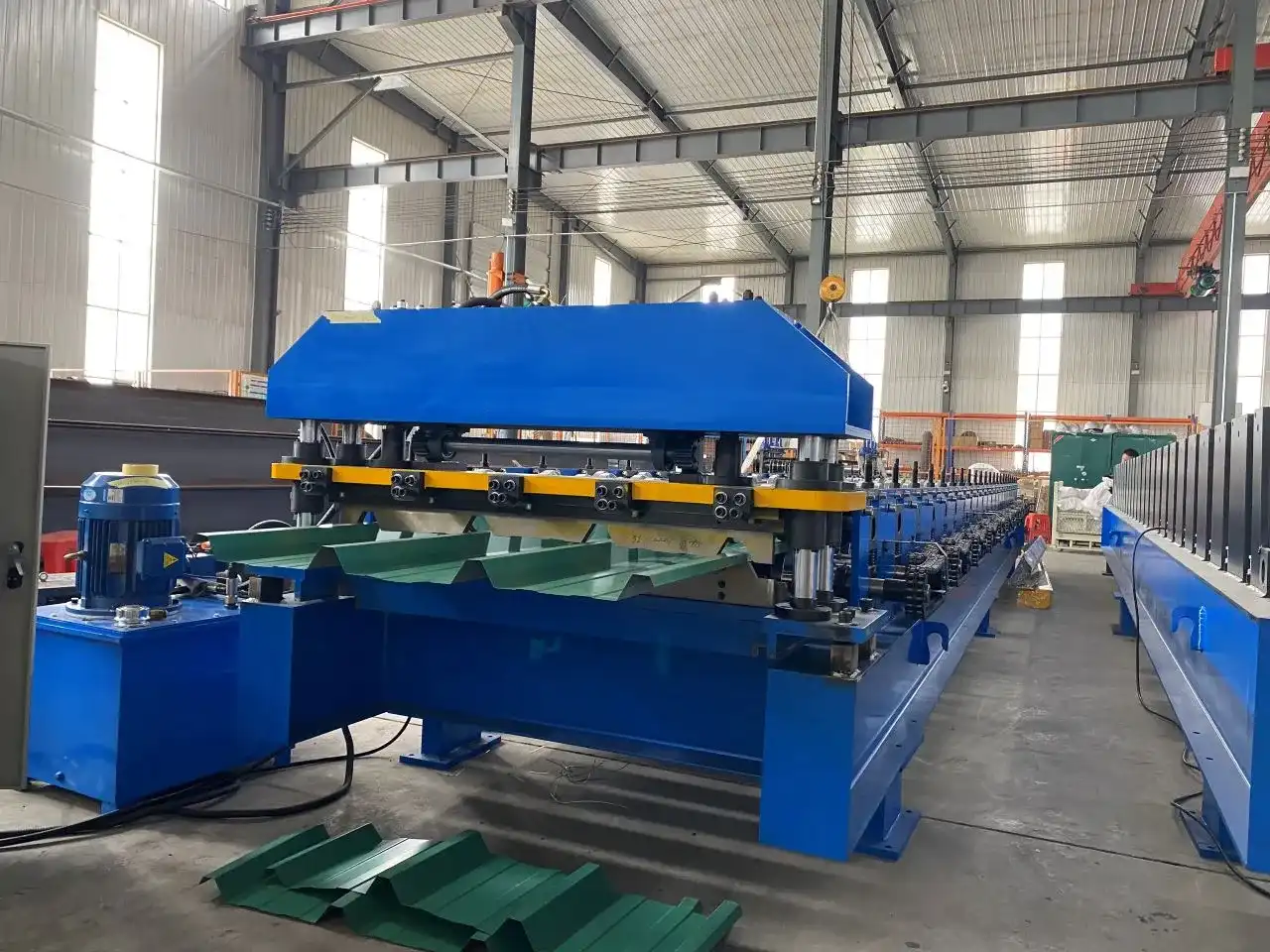
On a trapezoidal sheet roll forming machine, coil can be turned while it is still cool, so the metal doesn't get hot. Leveling and guide tools, forming stations, an encoder, a PLC, a cutting unit, a run-out table, and an automatic stacker that can be added if needed are all part of a full line. It puts the coil on, lines it up, shapes it, measures it, cuts it, and lets it go. Every station, encoder, and cutter needs to be in sync for readings to be stable. And the PLC tells the hydraulic cutter what to do. The encoder keeps track of the length. Before every production start, there should also be a test run and a review of the first panel.
ZTRFM High-Speed Machine Specifications
This is what our fast model has to offer. It can be between 0.3 mm and 1 mm thick, and it can be 1000 mm or 1250 mm wide. There are 26 roller stations on the line. Each one has 45# steel rollers that are hard chrome-plated and 80 mm solid shafts. The frame is made of cast iron, and the body is made of 350 H steel. A gearbox drive makes it move easily. It can move at speeds between 0 and 60 meters per minute thanks to a main motor with 5.5 kW. A 7.5 kW hydraulic station pulls the cutter along. It's possible for Cr12MoV blades to be off by 1.25 mm. Voltage, width, and stations can be changed, but three-phase power at 380V and 50Hz is what most people use.
Production Capacity in Real Life
You don't use that much every day if your top speed is 60 meters per minute. It depends on the length, width, shape difficulty, cutting method, operator skill, and how often the coils are switched on and off in the panel. During shift time, things are also set up, checked, packed, and moved around. I can figure out what the real result will be when buyers tell me the lengths and widths of their panels and coils. You can choose lengths from 3 feet to 20 feet 10 inches. I look at the run-out table and stacker space and compare the longest panel to them. Automatic stacking and quantity control cut down on the amount of work that needs to be done, and painted surfaces stay safe. Before you accept the job, check the size, alignment, accuracy of the cuts, quality of the surface, and safety features.
From Coil to Finished Panel: Process and Upkeep
Coil Checks Before Forming
The coil is the first thing that makes sound. It is my job to make sure that the trapezoidal sheet roll forming machine is the right size, shape, sharpness, finish, and fit. As a result, roll shapes and settings may need to be changed for each type of coil, such as galvanized, pre-painted, Galvalume, and aluminum. In order to make our 45# steel rollers last longer and keep surfaces smooth, we hard chrome plate them. Each station has a coil that moves through it step by step. An encoder checks the length, and a cutter cuts each sheet to the size that was chosen. Sheets are stacked so that gaps show up if the profile is off. This is done as a quality check.
Common Defects and Their Causes
There are a few main things that cause most of the problems. It's likely that there is a problem with the coil edge or the alignment if the width isn't even. If rollers are worn out or not lined up right, the ribs may not be straight. Most of the time, errors in length are caused by issues with the scanner or the hydraulics. Rough rollers or coil guides get scratched when dirt or dust sits on them. If the rollers are too close together, there is too much or too little pressure, or the blade is dull, the edges will curl, and the cuts will not be even. This will help your team figure out what to do next. Write down each mistake and how it was fixed. It's also important to have cuts that don't have burrs because rough edges let rust happen and hurt your hands when you use them. Blades made of Cr12MoV work better for long runs.
Maintenance for Long-Term Operation
Taking care of things regularly keeps them correct and up to date. I always tell the workers to get rid of any scrap metal, make sure the coils are lined up right, check the hydraulic oil level, test the emergency stops, and listen for any odd sounds or movements. You should grease the moving parts, make sure the shaft is straight, fix the screws, and check the electrical connections, sensors, hoses, seals, and encoder once a week or once a month. Make a list of all the parts that were checked, fixed, or replaced. By taking care of things before they break, you can avoid unplanned downtime, make rollers and bearings last longer, and cut down on scrap. Online tests on ZTRFM can be done with Siemens cloud IoT. This lets researchers find a problem without having to go to the site.
Selecting a Machine, Supplier, and Budget
Matching the Machine to Your Production
Not a price list, but a plan for how you're going to make things. There are different levels of automation that are needed for contractors, distributors, OEM shops, and shops that make metal buildings. Lines that are fully automatic make it easy to repeat steps and save time. Lines that are only partially automatic are better for small projects or jobs. A machine that only prints one side at a time saves money and room on the floor. You can switch between these two profiles more slowly because they are so different. If you want to know the difference between hydraulic and flying cutting, built-in and other decoilers, coil weight, plant space, and future growth room, read on. We have quick-change cassette tooling that many-profile shops can use. If you sign an NDA, we can also make profile-to-order tooling from your sample panel or CAD plan.
Evaluating Manufacturers and Suppliers
When looking for a reliable company to make trapezoidal sheet roll forming machines, look for one that has worked with both roofs and wall panels before, makes consistent parts, and keeps good records. If someone in the US wants to buy something from your company, I would look at their past exports, make sure it meets electrical standards, make sure it's well-packaged for sea freight, and offer English manuals, spare parts, and help with installation. Many buyers in the US want to see a video of a trial run with their own coil before they ship, so ask for one before you ship. ZTRFM was set up in Botou, Cangzhou, in 2014. Our machines are used in more than 150 countries, and we have ISO 9001, CE, and CAS certifications. Send them all the same standard sheet so that it is easy to compare their quotes.
Cost Factors and Common Buying Mistakes
There are different prices for each profile design, forming width, thickness, station count, decoiler type, cutting system, PLC controls, stacking equipment, and any other changes that are made. Setting up, training, packing, shipping, taxes, and release are all part of the price. More changes can be made to new machines, and they come with better warranties and support for a longer time. It costs less up front to buy a used machine, but you need to carefully check the rollers, gears, bearings, hydraulics, and how easy it is to get to spare parts. Most people make the mistake of buying based on the advertized speed or base price, without checking the drawing or thickness or paying attention to wind and snow loads, corrosion, fire safety, or building codes. Take a look at all of the services, like the decoiler, extra rollers, and training, before making a choice.
Conclusion
The ribs in trapezoidal metal roofing make it stiffer, keep water out, and speed up the installation process. It is still a good choice for steel warehouses. Profile choice is based on span, purlin spacing, wind and snow loads, insulation, and building codes in the area. The weather and the amount of rust the coil will be subject to should also be taken into account. The panels are made from a coil that is left out in a trapezoidal sheet roll forming machine to cool down. How much work gets done depends on more than just top speed. It also depends on panel length, thickness, cutting method, and switching time. Repairs are done regularly, coils are carefully checked, and any problems are kept track of. This keeps the sizes the same. Before you buy something, it's smart to look at how much it costs, how useful the machine is, and how experienced the seller is.
FAQ
1. Is trapezoidal roofing a good fit for steel warehouses?
You can get galvanized or pre-painted trapezoidal steel strips. They are strong, easy to install, last a long time, and don't cost too much. In places near the ocean that are acidic, aluminum works well. Still, I believe you should have an engineer check the span, purlin spacing, wind and snow loads, and make sure they follow the local building codes before you place your order.
2. Can one machine make several profiles?
A normal roll maker makes one shape that is only used for that purpose. If you use interchangeable cassette tools or a double-layer design, you can add more profiles. However, it takes more work to switch between the layers of a double-layer design. Give us your list of names when it comes to pricing.
3. What coil thickness can the machine form?
We can form PPGI, GI, and aluminum from 0.3 mm to 1 mm on our high-speed machine. Send us your coil specs to be sure of the width that can be made. It depends on the rollers, shafts, motor, and material.
4. Should I pick hydraulic or flying cutting?
Our fast line can cut with an accuracy of ±1 mm and is good for most everyday tasks. For flying cutting, which speeds up work, it's important to talk about your daily panel goal.
Request a Steel Warehouse Roofing Machine Proposal from ZTRFM
In Botou, Cangzhou, ZTRFM is a business that makes trapezoidal sheet roll forming machines. Their machines are used in more than 150 countries, and they are certified by ISO 9001, CE, and CAS. Email zhongtuorollforming@gmail.com with a profile drawing or sample, as well as the coil's width, thickness, voltage, and output you want to achieve. After that, our engineers will set up the system, give you a quote, and make plans for a test run.
References
1. International Code Council, International Building Code, 2021
2. American Society of Civil Engineers, ASCE/SEI 7-22 Minimum Design Loads and Associated Criteria for Buildings and Other Structures, 2022
3. American Iron and Steel Institute, AISI S100 North American Specification for the Design of Cold-Formed Steel Structural Members, 2016
4. ASTM International, ASTM A653/A653M Standard Specification for Steel Sheet, Zinc-Coated (Galvanized) or Zinc-Iron Alloy-Coated (Galvannealed) by the Hot-Dip Process, 2022
5. Metal Building Manufacturers Association, Metal Building Systems Manual, 2018
6. George T. Halmos, Roll Forming Handbook, CRC Press, 2006
